It seems we are having a bit of a heat wave this week. Whew! Can't wait until it is over, but in the mean time, we have to all try to stay as cool as possible. Since so many of our customers are also animal owners or animal lovers, it is a good time to remind everyone to be extra diligent with their animals in this heat.
Please do not leave your pet in the car during this heat wave. I know many people like to take their dogs with them when they run errands, but if you can't do them early in the morning, then just leave them at home. It is just too hot to sit in a car, even with all the windows down. Your beloved friend will be much more comfortable at home, than in the hot car.
Water. Make sure your pets have plenty of fresh, clean, cold water to drink. This is especially important for animals kept outside. Add ice to it periodically to make it as cold as possible. It is critically important that they have access to fresh, clean, cool water at all times. Also, be sure to provide shade for them as a resbit from the sun and heat. We all know it can be many degrees cooler in the shade than in the sun and this is a welcome relief to your animal. Some animals enjoy a small kiddie pool full of water to cool off in. If your pet doesn't like to get wet, try this. Fill a kiddie pool or any container large enough to accommodate your pet, with sand. Freeze a couple of gallon jugs or large freezer bags full of water and bury them in the sand. Make sure you put this in the shade and it will provide a cool place for your pet to escape from the heat.
If your pet isn't an indoor pet and if you have a nice cool garage, it can be a good idea to temporarily put your pet in the garage to make sure they stay nice and cool. If this isn't an option, then you will need to take a couple extra steps to ensure your pet stays cool and comfortable during this heat wave.
Remember, our pets depend on us for their health, safety and well being. This heat is hard on them and it doesn't take that much extra effort to make sure they are comfortable and well cared for during this heat wave.
Showing posts with label water. Show all posts
Showing posts with label water. Show all posts
Thursday, August 25, 2011


Wednesday, May 4, 2011
Earth Fair 2011
Just wanted to let you all know that the Pine Cove Water District will have a booth at the Earth Fair again this year. Last year we did a quick set up to see if there would be enough interest to warrant doing a booth again this year and there was! Happily, people are interested in saving water and other sustainable living ideas. So we will be back bigger and better this year!
Our focus for this year will be compost, mulch and water in the garden. While many of you are familiar with soaker hoses, drip systems and so on, we will be showcasing an very old idea that isn't used much any more but should be! We will have samples of easy to make compost bins and will have samples of the 3 stages of compost as well as ideas on what to compost.
There will be some other things there as well and lots of information. So we hope you will stop by and visit us and see what Pine Cove Water District is doing to promote water conservation.
Our focus for this year will be compost, mulch and water in the garden. While many of you are familiar with soaker hoses, drip systems and so on, we will be showcasing an very old idea that isn't used much any more but should be! We will have samples of easy to make compost bins and will have samples of the 3 stages of compost as well as ideas on what to compost.
There will be some other things there as well and lots of information. So we hope you will stop by and visit us and see what Pine Cove Water District is doing to promote water conservation.
Tuesday, April 26, 2011
Monday Musings a day late!
Well I didn't get to post yesterday, so here I am today. Hope you all had a wonderful weekend and enjoyed the holiday, if you celebrate. The weather was not so good, but at least there was no snow! For some reason, snow just seems really wrong at Easter time. But the rest of the week looks pretty good. Hopefully it won't be long until spring is here in full swing.
Next month will bring the Earth Fair and Pine Cove Water District will again have a booth there. I would encourage you to stop by and say hi and see what we have to show you. As you all know already, we are leaving Stage I, however, that doesn't mean you should stop conserving water. So part of our focus at the Earth Fair will be on how to conserve water in the garden. If we get into good habits of conserving water, then even when we have dry years, we will be able to still enjoy our gardens.
There are a few tricks we can all do to help make our gardens retain water throughout the summer months. We will be demonstrating examples of how to do this at the Earth Fair. We hope you can stop buy and say hi.
Next month will bring the Earth Fair and Pine Cove Water District will again have a booth there. I would encourage you to stop by and say hi and see what we have to show you. As you all know already, we are leaving Stage I, however, that doesn't mean you should stop conserving water. So part of our focus at the Earth Fair will be on how to conserve water in the garden. If we get into good habits of conserving water, then even when we have dry years, we will be able to still enjoy our gardens.
There are a few tricks we can all do to help make our gardens retain water throughout the summer months. We will be demonstrating examples of how to do this at the Earth Fair. We hope you can stop buy and say hi.
Wednesday, April 20, 2011
Springs
Due the the wet winter we have experienced, you may notice that springs are popping up all over Pine Cove! It may seem like someones water is leaking as some of them are running pretty good. If you see water running and you aren't sure if it is a leak or a spring, give us a call and we can probably tell you if it is a spring or not by the location. It is better to be safe than sorry.
Tuesday, April 19, 2011
More Frequently Asked Questions
It's Tuesday, so that means it is time for more frequently asked questions to be answered. If you think of a question for us that you never see answered here, email us at info@pcwd.org and we will answer it here on the blog for you! We are trying to think of everything, but you never know when someone will come up with a question that we haven't thought of yet.
Q. Did you raise rates in February because I am conserving water and you aren't selling as much now?
A. In a word, no. While our water sales are down due to less people living here in Pine Cove as well as conservation efforts by many of our residents, we raised our rates do to the fact that our costs are escalating. Electricity has gone way up and so have many of the materials that we use. This economy is hard on everyone.
Q. Why do I keep getting a bill when I am not up there to use any water?
A. There is an advanced minimum billing amount of $47 for each water meter. Water usage is added on top of that minimum billing amount. If you use no water you will not be charged for any water. Only for the minimum amount of $47. The minimum amount is due even if you don't visit your home and don't use any water.
Q. Why can't you just come out and turn my water off so I don't get a bill at all?
A. We have to continually maintain all the water lines and make sure water is available to every property with a meter at all times. The advanced minimum billing amount of $47 goes towards this maintenance. Even if you choose not to visit your mountain home for years on end, we still have to maintain the lines to your home and make sure that there is water available for you when you do come up to visit.
Q. Why do I have to pay the water bill when I have a leak?
A. All water that runs through a customer's meter is the customer's responsibility and must be paid for. However, we do realize that when someone has a leak, the bill for the extra water used can be a financial hardship for them. We are therefore usually able to work with a customer who has had a leak and offer a payment plan to help make the payment more manageable. We are unable to forgive water bills, even catastrophic ones, due to the policy that is set by our Board of Directors.
Q. Why do you keep telling people to turn their water off when they leave their mountain home? It is very inconvenient to keep turning my water off and on when I arrive and leave.
A. See the question right above this one. A lot of leaks occur in homes that are only being used part of the time. The owner leaves without turning the water off and then has no way of knowing when something breaks or a leak develops. When we read the meters and notice a spike in water use, we will contact the owner to let them know, but by that time, they could have lost a lot of water. During the cold, winter months, pipes can burst, as was the case this past winter, and this can cause not only a high water bill, but if it happens in the house, it can cause a lot of damage as well. No one wants to deal with water damage in their home or a high water bill. Imagine arriving at your mountain home and opening the door only to find it had been flooded by a broken pipe. Turning your water off at your customer valve anytime you leave your mountain home assures that if something does go wrong, it will not result in catastrophic water loss or damage. It only takes a minute to do it and it can save countless hours of aggravation and a lot of money.
Well that is enough for this week. Remember if you think of any question that we haven't answered yet, go ahead and email us. We want everyone to understand how and why the water district operates the way it does. For more information you can always attend our monthly board meeting as well.
Q. Did you raise rates in February because I am conserving water and you aren't selling as much now?
A. In a word, no. While our water sales are down due to less people living here in Pine Cove as well as conservation efforts by many of our residents, we raised our rates do to the fact that our costs are escalating. Electricity has gone way up and so have many of the materials that we use. This economy is hard on everyone.
Q. Why do I keep getting a bill when I am not up there to use any water?
A. There is an advanced minimum billing amount of $47 for each water meter. Water usage is added on top of that minimum billing amount. If you use no water you will not be charged for any water. Only for the minimum amount of $47. The minimum amount is due even if you don't visit your home and don't use any water.
Q. Why can't you just come out and turn my water off so I don't get a bill at all?
A. We have to continually maintain all the water lines and make sure water is available to every property with a meter at all times. The advanced minimum billing amount of $47 goes towards this maintenance. Even if you choose not to visit your mountain home for years on end, we still have to maintain the lines to your home and make sure that there is water available for you when you do come up to visit.
Q. Why do I have to pay the water bill when I have a leak?
A. All water that runs through a customer's meter is the customer's responsibility and must be paid for. However, we do realize that when someone has a leak, the bill for the extra water used can be a financial hardship for them. We are therefore usually able to work with a customer who has had a leak and offer a payment plan to help make the payment more manageable. We are unable to forgive water bills, even catastrophic ones, due to the policy that is set by our Board of Directors.
Q. Why do you keep telling people to turn their water off when they leave their mountain home? It is very inconvenient to keep turning my water off and on when I arrive and leave.
A. See the question right above this one. A lot of leaks occur in homes that are only being used part of the time. The owner leaves without turning the water off and then has no way of knowing when something breaks or a leak develops. When we read the meters and notice a spike in water use, we will contact the owner to let them know, but by that time, they could have lost a lot of water. During the cold, winter months, pipes can burst, as was the case this past winter, and this can cause not only a high water bill, but if it happens in the house, it can cause a lot of damage as well. No one wants to deal with water damage in their home or a high water bill. Imagine arriving at your mountain home and opening the door only to find it had been flooded by a broken pipe. Turning your water off at your customer valve anytime you leave your mountain home assures that if something does go wrong, it will not result in catastrophic water loss or damage. It only takes a minute to do it and it can save countless hours of aggravation and a lot of money.
Well that is enough for this week. Remember if you think of any question that we haven't answered yet, go ahead and email us. We want everyone to understand how and why the water district operates the way it does. For more information you can always attend our monthly board meeting as well.
Tuesday, March 8, 2011
Rain Total
According to the weather station, we got a total of .28 inches of rain yesterday. That's pretty good. One of the things we discuss at the board meetings is the ground water situation and if the moisture that we have received has been plentiful enough to make it back down into the water supply. If you have any questions on the state of our water supply, it is a good idea to attend a board meeting as they are a wealth of information.
If you need a weather forecast, I have link posted on the left hand side of the blog to get the week's forecast. We are still trying to get the weather station live onto the blog, but so far, we haven't been able to achieve that. But we will keep working on it. In the meantime, I hope the links will work out.
I also posted several other links that Pine Covers might find useful. So take a minute and look around the blog. I am continually adding information that I think is helpful to both our full-time residents as well as our part-time residents.
If you need a weather forecast, I have link posted on the left hand side of the blog to get the week's forecast. We are still trying to get the weather station live onto the blog, but so far, we haven't been able to achieve that. But we will keep working on it. In the meantime, I hope the links will work out.
I also posted several other links that Pine Covers might find useful. So take a minute and look around the blog. I am continually adding information that I think is helpful to both our full-time residents as well as our part-time residents.
Wednesday, February 23, 2011
Are you ready?
They are calling for more snow on Friday night. I don't know if I am ready for more just yet, but ready or not, it will come and I can't do a thing about it. How about you? Are you ready for more snow so soon after this last storm? Luckily, my misery is eased by the fact that all this snow will melt into the ground and provide water for a the trees and hopefully our wells, which is a very good thing!
So when I am outside trying to shovel out a path for my little dogs so they don't sink down into the snow and disappear, I try to tell myself I am really watering the pine tree next to the path where I am shoveling. It doesn't make the shoveling any easier, but it does make it a more satisfying activity knowing that the snow I am piling up on the ground will eventually melt, soak into the ground and go to the tree roots. Keeping this in mind makes me a little more of an enthusiastic shoveler! So as this next storm approaches, I will try to keep in mind how much we need the moisture and I will try not to complain, no matter how cold it gets and no matter how high we have to pile up the snow!
So when I am outside trying to shovel out a path for my little dogs so they don't sink down into the snow and disappear, I try to tell myself I am really watering the pine tree next to the path where I am shoveling. It doesn't make the shoveling any easier, but it does make it a more satisfying activity knowing that the snow I am piling up on the ground will eventually melt, soak into the ground and go to the tree roots. Keeping this in mind makes me a little more of an enthusiastic shoveler! So as this next storm approaches, I will try to keep in mind how much we need the moisture and I will try not to complain, no matter how cold it gets and no matter how high we have to pile up the snow!
Wednesday, February 16, 2011
Sustainable Living
It has been a while since I posted anything on sustainable living, so I thought I would do it today. I was over at reusit.com reading through some of their articles. I really like that website because it not only has lots of wonderful, re-usable items to buy, but they also have a ton of information as well.
It continues to amaze me that so many people are still using bottled water. I thought by now we would all have our water bottles and fill them up at home. Here is a recent article I found on reusit.com that discusses this very thing.
Fast Facts on Disposable Bottles
2,480,000 tons of plastic bottles and jars were thrown away in one year (2008).
Tap water is cleaner, cheaper and healthier than store-bought water.
60 million single-use drink containers were purchased in 2006, and 3 out of 4 were thrown out directly after use.
Plastic bottles are among the most prevalent source of pollution found on our beaches.
Plastic trash absorbs pre-existing organic pollutants like BPA and PCBs.
The Problem
An estimated 2,480,000 tons of plastic bottles and jars were disposed of in 2008. (EPA)
Store-bought bottled water is a rip off. Tap water is often subject to more stringent regulation and testing than bottled water. It costs a fraction of the cost from the tap. It is cleaner, cheaper, and thus healthier. (Natural Resources Defense Council)
As of 2006, and estimated 60 billion PET single-use beverage containers were bought. Approximately 45 billion of these were discarded after use. (Container Recycling Institute)
Another estimation put bottled water spending at a collective $100 billion in the US for 2006. (OneWorld.net)
Every square mile of the ocean has 46,000 pieces of floating plastic in it. (UN, 2006)
Ten percent of the plastic produced every year worldwide winds up in the ocean. 70% of which finds its way to the ocean floor, where it will likely never degrade. (UN, 2006)
The Impact
Along with plastic bags, plastic bottles are among the most prevalent sources of pollution found on our beaches. (Ocean Conservancy)
The extremely slow decomposition rate of plastic bottles leaves them to drift on the ocean for untold years.
When plastics break down, they don't biodegrade, they photo degrade. This means the materials break down to smaller fragments. These readily absorb toxins which contaminate soil, waterways, and animals upon digestion.
Refuse plastic absorbs pre-existing organic pollutants, including Bisphenol A (BPA) and polychlorinated biphenyls(PCBs).
On PCBs: "Animals that ate food containing large amounts of PCBs over short periods of time had mild liver damage and some died. Animals that ate smaller amounts of PCBs in food over several weeks or months developed various kinds of health effects, including anemia; acne-like skin conditions; and liver, stomach, and thyroid gland injuries." (The Agency for Toxic Substances & Disease Registry)
One study involving the Center for the Evaluation of Risks to Human Reproduction and a National Toxicology Program (NTP) Expert Panel has reported on effects of BPA on development. They found cause for "some concern" related to behavioral, neural, and prostate function effects on mammals. On the NTP's concern scale, "some concern" rates 3 out of 5.
The Solution
Hope is not lost; 2008 marked the first year since their introduction that fewer PET bottles and jars were discarded than the previous year (from 2,140,000 tons in 2007 to 1,950,000 tons in 2008). The same can be said for HDPE bottles (590,000 tons in '07 to 530,000 tons in '08).
The solution is to embrace a cultural shift away from use-and-toss mentality: Each high-quality reusable, BPA-free bottle can eliminate hundreds (if not thousands) of disposable bottles.
New technologies have been developed in Singapore that will allow manufacturers to use organic chemicals called ionic liquids to pull C02 from the atmosphere (in much the same way plants do) and use these gasses to make non-toxic, BPA-free bottles that are 40% C02 by weight. Not only would such bottles be healthy for consumers, they would in fact remove harmful emissions from the environment.
New research published in Biomacromolecules has found that by treating BPA-containing plastics with ultraviolet light and heat, we may in the near future be able to dispose of the persistent pollutant much more safely and reliably. After treating BPA-containing plastics with light and heat, they are exposed to a fungus (which is already used for environmental cleanup) and burie. In one year's time the fungi had completely consumed the plastic and left no trace of BPA. While it is not yet in wide use, this treatment and other related research marks the start of a new, greener future.
I don't know about you, but I find some of these facts to be very scary. And the really bad thing about all of this is that it is totally unnecessary. We have excellent water quality here in Pine Cove and so we should all be taking our own water from home with us where ever we go. I do! In fact, I now take a gallon insulated jug filled with ice and water with me on trips off the hill. There is nothing better than having a nice, cold sip of Pine Cove water when I am off the hill. So do the environment a favor and start taking your own water with you. You will not only help to save our oceans and landfills, but you will be saving money as well.
It continues to amaze me that so many people are still using bottled water. I thought by now we would all have our water bottles and fill them up at home. Here is a recent article I found on reusit.com that discusses this very thing.
Fast Facts on Disposable Bottles
2,480,000 tons of plastic bottles and jars were thrown away in one year (2008).
Tap water is cleaner, cheaper and healthier than store-bought water.
60 million single-use drink containers were purchased in 2006, and 3 out of 4 were thrown out directly after use.
Plastic bottles are among the most prevalent source of pollution found on our beaches.
Plastic trash absorbs pre-existing organic pollutants like BPA and PCBs.
The Problem
An estimated 2,480,000 tons of plastic bottles and jars were disposed of in 2008. (EPA)
Store-bought bottled water is a rip off. Tap water is often subject to more stringent regulation and testing than bottled water. It costs a fraction of the cost from the tap. It is cleaner, cheaper, and thus healthier. (Natural Resources Defense Council)
As of 2006, and estimated 60 billion PET single-use beverage containers were bought. Approximately 45 billion of these were discarded after use. (Container Recycling Institute)
Another estimation put bottled water spending at a collective $100 billion in the US for 2006. (OneWorld.net)
Every square mile of the ocean has 46,000 pieces of floating plastic in it. (UN, 2006)
Ten percent of the plastic produced every year worldwide winds up in the ocean. 70% of which finds its way to the ocean floor, where it will likely never degrade. (UN, 2006)
The Impact
Along with plastic bags, plastic bottles are among the most prevalent sources of pollution found on our beaches. (Ocean Conservancy)
The extremely slow decomposition rate of plastic bottles leaves them to drift on the ocean for untold years.
When plastics break down, they don't biodegrade, they photo degrade. This means the materials break down to smaller fragments. These readily absorb toxins which contaminate soil, waterways, and animals upon digestion.
Refuse plastic absorbs pre-existing organic pollutants, including Bisphenol A (BPA) and polychlorinated biphenyls(PCBs).
On PCBs: "Animals that ate food containing large amounts of PCBs over short periods of time had mild liver damage and some died. Animals that ate smaller amounts of PCBs in food over several weeks or months developed various kinds of health effects, including anemia; acne-like skin conditions; and liver, stomach, and thyroid gland injuries." (The Agency for Toxic Substances & Disease Registry)
One study involving the Center for the Evaluation of Risks to Human Reproduction and a National Toxicology Program (NTP) Expert Panel has reported on effects of BPA on development. They found cause for "some concern" related to behavioral, neural, and prostate function effects on mammals. On the NTP's concern scale, "some concern" rates 3 out of 5.
The Solution
Hope is not lost; 2008 marked the first year since their introduction that fewer PET bottles and jars were discarded than the previous year (from 2,140,000 tons in 2007 to 1,950,000 tons in 2008). The same can be said for HDPE bottles (590,000 tons in '07 to 530,000 tons in '08).
The solution is to embrace a cultural shift away from use-and-toss mentality: Each high-quality reusable, BPA-free bottle can eliminate hundreds (if not thousands) of disposable bottles.
New technologies have been developed in Singapore that will allow manufacturers to use organic chemicals called ionic liquids to pull C02 from the atmosphere (in much the same way plants do) and use these gasses to make non-toxic, BPA-free bottles that are 40% C02 by weight. Not only would such bottles be healthy for consumers, they would in fact remove harmful emissions from the environment.
New research published in Biomacromolecules has found that by treating BPA-containing plastics with ultraviolet light and heat, we may in the near future be able to dispose of the persistent pollutant much more safely and reliably. After treating BPA-containing plastics with light and heat, they are exposed to a fungus (which is already used for environmental cleanup) and burie. In one year's time the fungi had completely consumed the plastic and left no trace of BPA. While it is not yet in wide use, this treatment and other related research marks the start of a new, greener future.
I don't know about you, but I find some of these facts to be very scary. And the really bad thing about all of this is that it is totally unnecessary. We have excellent water quality here in Pine Cove and so we should all be taking our own water from home with us where ever we go. I do! In fact, I now take a gallon insulated jug filled with ice and water with me on trips off the hill. There is nothing better than having a nice, cold sip of Pine Cove water when I am off the hill. So do the environment a favor and start taking your own water with you. You will not only help to save our oceans and landfills, but you will be saving money as well.
Monday, February 7, 2011
Monday Musings
Now that it is February, it is time to start thinking about our gardens. I harp on gardens here a lot because that is the one place where the most water is used and it can be difficult to cut back on outside watering and expect things to live. And yes we can plant natives, but what if you want to grow your own vegetables?
It is my goal to find a compromise between using excessive amounts of water outdoors and landscaping with gravel. There has to be a happy medium I think. Most of us move here because of the outstanding beauty of the forest only to find out we can't plant much in our gardens because we don't want to use water unnecessarily.
So how do we combine water conservation and gardening? Both are important. Gardens add beauty and give us a place to relax. They can provide food for us and nourish our souls as well. They provide food and shelter for the local wildlife as well. I do not know anyone who doesn't enjoy sitting out in the garden reading, snoozing or sipping iced tea. I love to just sit outside and watching the comings and goings of the birds and the squirrels. It is very relaxing and I think necessary to our mental health.
Last year I tried a product in my own garden called Dri Water. I have varying results with it. I used it according to their instructions. Some plants did well with it and others did not. So I am not sure I would invest in it. It would probably be good for someone going on vacation, but to use it regularly, I am not sold.
So now I am on a quest to find another way to save water while still having a garden here in the mountains. I am constantly adding compost to my garden so the soil will be able to absorb as much water as possible. I am mulching to keep the moisture in the soil from evaporating out. So what is the next step?
I thought about installing a drip irrigation system, but frankly it is a lot of work and I have seen the damage the squirrels do to other peoples systems and I don't want to be out there repairing it all the time. Add to the the cost and work of installing it and I don't think this is for me.
Option two would be soaker hoses. They can be put under the mulch and work pretty well. But I have personally found that if you have a lot of plantings, it can be a challenge to get them around each plant that needs watered. I end up running it longer to make sure that enough water is soaking in to the ground to reach the plants furthest from the hose. So, I don't think this is the greatest option either.
Hand watering can be effective, but it is very time consuming and hard to judge if you watering too much or not enough. So what is the solution? I will tell you in my next post.
It is my goal to find a compromise between using excessive amounts of water outdoors and landscaping with gravel. There has to be a happy medium I think. Most of us move here because of the outstanding beauty of the forest only to find out we can't plant much in our gardens because we don't want to use water unnecessarily.
So how do we combine water conservation and gardening? Both are important. Gardens add beauty and give us a place to relax. They can provide food for us and nourish our souls as well. They provide food and shelter for the local wildlife as well. I do not know anyone who doesn't enjoy sitting out in the garden reading, snoozing or sipping iced tea. I love to just sit outside and watching the comings and goings of the birds and the squirrels. It is very relaxing and I think necessary to our mental health.
Last year I tried a product in my own garden called Dri Water. I have varying results with it. I used it according to their instructions. Some plants did well with it and others did not. So I am not sure I would invest in it. It would probably be good for someone going on vacation, but to use it regularly, I am not sold.
So now I am on a quest to find another way to save water while still having a garden here in the mountains. I am constantly adding compost to my garden so the soil will be able to absorb as much water as possible. I am mulching to keep the moisture in the soil from evaporating out. So what is the next step?
I thought about installing a drip irrigation system, but frankly it is a lot of work and I have seen the damage the squirrels do to other peoples systems and I don't want to be out there repairing it all the time. Add to the the cost and work of installing it and I don't think this is for me.
Option two would be soaker hoses. They can be put under the mulch and work pretty well. But I have personally found that if you have a lot of plantings, it can be a challenge to get them around each plant that needs watered. I end up running it longer to make sure that enough water is soaking in to the ground to reach the plants furthest from the hose. So, I don't think this is the greatest option either.
Hand watering can be effective, but it is very time consuming and hard to judge if you watering too much or not enough. So what is the solution? I will tell you in my next post.
Tuesday, January 4, 2011
Tuesday Talk
Since it is the New Year, I decided to make the resolution of trying to post each day that I am here at work. That will be no easy feat because sometimes, matters at hand that have deadlines and so forth, take presidence. But I am going to try.
A couple weeks ago I mentioned that someone sent me a wonderful list of other water blogs and I promised to post links to them when I can. So here is this weeks. It is called The Water Cooler, California's First Official Water Blog. While there are things on here that pertain to the central coast or nortern CA, there is lots that deals with So Cal and it is all interesting and informative.
Go here to read it. I hope you enjoy it.
A couple weeks ago I mentioned that someone sent me a wonderful list of other water blogs and I promised to post links to them when I can. So here is this weeks. It is called The Water Cooler, California's First Official Water Blog. While there are things on here that pertain to the central coast or nortern CA, there is lots that deals with So Cal and it is all interesting and informative.
Go here to read it. I hope you enjoy it.
Thursday, December 23, 2010
Water Pics
With all of this rain, the creeks are running like rivers. Here is a picture taken from Highway 243 on the property where the Black wells are located.
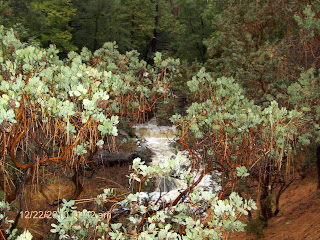
If you have any pictures of the water flowing around Pine Cove, please send them to me at pcwd2675@yahoo.com along with a description of the picture and I will post them here on the blog. Be sure to leave you name if you want credit for the picture. We would love to see your pictures of what is happening around Pine Cove.

If you have any pictures of the water flowing around Pine Cove, please send them to me at pcwd2675@yahoo.com along with a description of the picture and I will post them here on the blog. Be sure to leave you name if you want credit for the picture. We would love to see your pictures of what is happening around Pine Cove.
Friday, December 17, 2010
Other Blogs
I was sent a list of other water blogs the other day, that I thought was very informative. I have been trying to read through several of them, which is no small task as the list contained 30 blogs to peruse. I try to keep this blog on the lighter side and not get too political or preachy or delve into the more serious side of water issues.
However, water is a huge issue, not only here on the hill, but worldwide. So if you would like to read some blogs that are a little more in depth and discuss the many different facets of the world of water, I will post a new blog each Friday and you can decide for yourself if you want read them or not.
Here is the first one: Water For The Ages
If you enjoy it, please leave a comment and let us know if you are interested in other blogs and water related articles.
However, water is a huge issue, not only here on the hill, but worldwide. So if you would like to read some blogs that are a little more in depth and discuss the many different facets of the world of water, I will post a new blog each Friday and you can decide for yourself if you want read them or not.
Here is the first one: Water For The Ages
If you enjoy it, please leave a comment and let us know if you are interested in other blogs and water related articles.
Monday, November 29, 2010
Turn your water off!!!!
Just wanted to issue a not so subtle reminder that if you are leaving your mountain home, PLEASE TURN YOUR WATER OFF AT YOUR CUSTOMER SHUT OFF VALVE. This is the single most important thing you can do to prevent water damage from a broken or frozen pipe.
Please remember that all water that goes through your meter is your responsibility. Even water lost due to frozen or broken pipes. Turning your water off while you are away from your mountain home, can help prevent a diaster.
We recently sent the Winter Newsletter out and included in with the Newsletter you will find a brochure entitled Winterizing Tips. It has some good information on how to prepare for the cold winter months ahead. As always, if you have any questions, please feel free to contact us here at the water district. Our number is 951-659-2675 and there is someone in the office Monday thru Friday from 9 am until 4 pm. We will be happy to answer your questions for you.
Please remember that all water that goes through your meter is your responsibility. Even water lost due to frozen or broken pipes. Turning your water off while you are away from your mountain home, can help prevent a diaster.
We recently sent the Winter Newsletter out and included in with the Newsletter you will find a brochure entitled Winterizing Tips. It has some good information on how to prepare for the cold winter months ahead. As always, if you have any questions, please feel free to contact us here at the water district. Our number is 951-659-2675 and there is someone in the office Monday thru Friday from 9 am until 4 pm. We will be happy to answer your questions for you.
Friday, November 5, 2010
Frugal Friday
Let's talk about frozen pipes. According to State Farm, approximately 250,000 families have their homes ruined and their lives disrupted each winter by water pipes that freeze and burst. When the outside temperature drops below freezing, water pipes with little or no insulation can freeze and break.
Now, what does this have to do with Frugal Friday you might ask? Well, think of the cost of preparing your pipes for winter vs. repairing the damage done when they freeze and break. This is obviously a no brainer. Why would anyone want to deal the mess and disruption of frozen, broken pipes when it is so simple to prevent it? While it might mean a small cash outlay initially, the time, money, worry and inconvenience you will save is priceless.
Before the cold weather hits:
Insulate pipes in unheated areas and those that run along outside walls, floors or ceilings. There are several types of insulation available for this job and you can decide which one will work best for your situation.
Seal leaks that allow cold air inside near where pipes are located.
Disconnect garden hoses and cover faucets with special insulated faucet socks.
Once the mercury drops, you can open your cabinet doors to allow heat to get to the piping under sinks and vanities.
If you do experience frozen pipes or a leak, call a plumber immediately and turn your water off at your customer valve. Do not try to thaw the pipe with a torch or other open flame and do not use electrical appliances in areas of standing water because you could be electrocuted.
The biggest thing you can do to prevent frozen pipes, is to turn your water off at your customer valve anytime you leave your mountain home. This is the single most critical step you can take in preventing frozen and burst pipes.
Don't let water damage dampen your life this winter. Spend a few minutes protecting your water pipes to save time and money down the road. Remember it is cheaper to prevent a problem than it is to repair one. And remember that there does not have to be snow on the ground for it to be cold enough for pipes to freeze.
Now, what does this have to do with Frugal Friday you might ask? Well, think of the cost of preparing your pipes for winter vs. repairing the damage done when they freeze and break. This is obviously a no brainer. Why would anyone want to deal the mess and disruption of frozen, broken pipes when it is so simple to prevent it? While it might mean a small cash outlay initially, the time, money, worry and inconvenience you will save is priceless.
Before the cold weather hits:
Insulate pipes in unheated areas and those that run along outside walls, floors or ceilings. There are several types of insulation available for this job and you can decide which one will work best for your situation.
Seal leaks that allow cold air inside near where pipes are located.
Disconnect garden hoses and cover faucets with special insulated faucet socks.
Once the mercury drops, you can open your cabinet doors to allow heat to get to the piping under sinks and vanities.
If you do experience frozen pipes or a leak, call a plumber immediately and turn your water off at your customer valve. Do not try to thaw the pipe with a torch or other open flame and do not use electrical appliances in areas of standing water because you could be electrocuted.
The biggest thing you can do to prevent frozen pipes, is to turn your water off at your customer valve anytime you leave your mountain home. This is the single most critical step you can take in preventing frozen and burst pipes.
Don't let water damage dampen your life this winter. Spend a few minutes protecting your water pipes to save time and money down the road. Remember it is cheaper to prevent a problem than it is to repair one. And remember that there does not have to be snow on the ground for it to be cold enough for pipes to freeze.
Tuesday, November 2, 2010
Board Meeting
We will be having our monthly board meeting next Wednesday, November 10th at 10 am. The public is welcome to attend and we hope to see you there!
Thursday, October 7, 2010
Leaks again....
I know I just posted about leaks, however, this cannot be stressed too much. It is not the water district's responsibilty to find your leaks. If we do discover a leak, we try our best to get in touch with you to let you know. However, many leaks go undetected until we read the meters for billing. While doing the billing, if Becky sees an unusual jump in your water usage, she will try to contact you to let you know. However, it is ultimately your responsibility and as always, the best defense is a good offense. Turning your water off when you leave your mountain home will prevent a lot of problems. Things can go wrong at any time and if you are not on the hill for long periods of time, this can result in a lot of water loss.
So always remember and don't ever forget. When you leave your mountain home, TURN YOUR WATER OFF at your customer valve. This way you can rest assured that you won't return to a problem or get that dreaded phone call from Becky! Once the water runs through your meter, it is your responsibility. If you do not know where your customer shut off valve is, please call us at 951-659-2675 during our regular business hours, which are 9 to 4, Monday thru Friday, and we will be happy to help you locate it.
So always remember and don't ever forget. When you leave your mountain home, TURN YOUR WATER OFF at your customer valve. This way you can rest assured that you won't return to a problem or get that dreaded phone call from Becky! Once the water runs through your meter, it is your responsibility. If you do not know where your customer shut off valve is, please call us at 951-659-2675 during our regular business hours, which are 9 to 4, Monday thru Friday, and we will be happy to help you locate it.
Friday, October 1, 2010
LEAKS!
Please be aware that you can develop a leak at any time of the year and not just during the winter months. Water heaters, washing machines, dish washers, refrigerators, irrigation systems and toilets can all be sources of leaks. Anything in your home that uses water should be considered a possible source for a leak to develop.
This can happen to any one at any time. Washing machine hoses are notorious for suddenly breaking and causing leaks or flooding. It isn't just frozen pipes that burst that can cause water leaking and flooding in a home. One must be diligent at all times.
If you do develop a leak, turn your water off at your customer valve until you can get it repaired. Once water runs through your meter, you are responsible for paying for it. If a leak goes unchecked for a long period of time, this could amount to hundred's or thousand's of dollars worth of water. No one wants a bill like that!
We cannot say this enough, if you are leaving your home, turn your water off at your customer valve.
This can happen to any one at any time. Washing machine hoses are notorious for suddenly breaking and causing leaks or flooding. It isn't just frozen pipes that burst that can cause water leaking and flooding in a home. One must be diligent at all times.
If you do develop a leak, turn your water off at your customer valve until you can get it repaired. Once water runs through your meter, you are responsible for paying for it. If a leak goes unchecked for a long period of time, this could amount to hundred's or thousand's of dollars worth of water. No one wants a bill like that!
We cannot say this enough, if you are leaving your home, turn your water off at your customer valve.
Wednesday, July 21, 2010
Meter Reading
Next week the boys will be out and about reading meters. Bills will go out on or about August 2. Remember, bills are due on the 25th of the month. Please remember to pay on time to avoid a $15 late fee. Thank you.
Thursday, July 15, 2010
Free Water Saving Kits Available!

We still have water saving kits available for our customers and they are yours just for the asking. That's right. There is no charge for them! Stop by the office at 24917 Marion Ridge Road and ask Becky or Vicki to give you one. They are generally in a good humor and will fulfill your request happily.
The kits contain:
one Earth Massage 1.5 GPM Showerhead with a two setting massage spray.
one Kitchen Swivel 1.5 GPM Aerator with dual spray functinality.
two Bathroom Faucet 1.0 GPM Aerators for half the flow but twice the power. These are commercial grade aerators.
Toliet Water Saver which takes excess water from the bowl and diverts it to the tank to reduce water consumption.
Toilet Leak Detection Tablets which are FDA certified, non-toxic dye tablets used to detect leaks in toilets.
Flow Meter Bag. The bag your kit comes in doubles as a flow meter to identify water wasters throughout the home.
Water Conservation Wheel provides useful ways to conserve water around the house.
Tuesday, June 1, 2010
Customer Appreciation Day
Hopefully everyone had a fun filled Memorial Day Weekend. It seemed there was lots to do from yard sales to BBQs. The weather was beautiful so no matter what activities you chose to participate in, it should have been enjoyable!
Now that it is June 1st, it is time to remind you about our annual Customer Appreciation Day, complete with a BBQ lunch. It will be held at Dutch Flats again this year and all Pine Cove residents are welcome to come. It is a wonderful opportunity to come out and meet some fellow Pine Covers, have a wonderful lunch and find out what is going on with the water distict.
The BBQ will start right after the Pine Cove Property Owners Association meeting. Jerry Holldber, General Manager of the Pine Cove Water District will be giving a talk at the PCPOA meeting, so you might want to attend the meeting first and then head on over to Dutch Flats for lunch. Jerry and Stitch will be holding court at Dutch Flats and will be available to answer any questions you might have regarding the water district.
Due to their immense popularity, we will again be serving tri tip sandwiches. We will also have homemade salads and some desserts available. You don't want to be late because last year there wasn't a single bite of tri tip left. So make sure you get there early and get yours. You can enjoy the beautiful setting at Dutch Flats, tour the aeration plant or just enjoy having lunch in the great outdoors under the trees. Hope to see you there!
Now that it is June 1st, it is time to remind you about our annual Customer Appreciation Day, complete with a BBQ lunch. It will be held at Dutch Flats again this year and all Pine Cove residents are welcome to come. It is a wonderful opportunity to come out and meet some fellow Pine Covers, have a wonderful lunch and find out what is going on with the water distict.
The BBQ will start right after the Pine Cove Property Owners Association meeting. Jerry Holldber, General Manager of the Pine Cove Water District will be giving a talk at the PCPOA meeting, so you might want to attend the meeting first and then head on over to Dutch Flats for lunch. Jerry and Stitch will be holding court at Dutch Flats and will be available to answer any questions you might have regarding the water district.
Due to their immense popularity, we will again be serving tri tip sandwiches. We will also have homemade salads and some desserts available. You don't want to be late because last year there wasn't a single bite of tri tip left. So make sure you get there early and get yours. You can enjoy the beautiful setting at Dutch Flats, tour the aeration plant or just enjoy having lunch in the great outdoors under the trees. Hope to see you there!
Subscribe to:
Posts (Atom)